

































The History of Christmas Carols for Kids
Discover where Christmas carols came from, how they became holiday favorites, and why singing together brings joy at Christmas.
🎶 The History of Christmas Carols
Every holiday season, we hear joyful voices singing songs like “Jingle Bells”, “Silent Night”, and “We Wish You a Merry Christmas.” These songs are called Christmas carols, and they’ve been spreading cheer for hundreds of years.
But where did carols come from? And why do we still sing them today?
Let’s find out!
🎵 What Is a Carol?
A carol is a song that tells a story or celebrates a special time of year. Carols can be about joy, peace, or faith. While we mostly sing them at Christmas now, long ago, people sang carols during other seasons too — like spring or harvest festivals!
Carols were meant to be sung by groups of people, often in a circle or while dancing. They brought people together in celebration.
🕰️ Where Did Christmas Carols Begin?
The tradition of singing songs during Christmas goes back over 1,000 years! In the Middle Ages, people in Europe sang songs to celebrate the birth of Jesus and the joy of the season. These songs were passed down from village to village.
The first known English Christmas carol was written in 1410, though very few from that time survive today.
Later, in the 1600s, many churches used carols during Christmas services. People began writing songs in their own languages, not just in Latin. That meant more families could join in!
🚪 Going Door to Door: Caroling
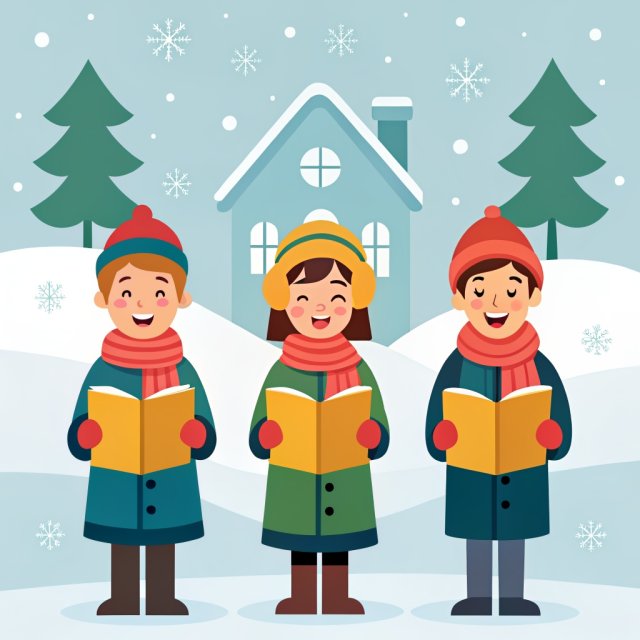
The idea of caroling — going from house to house singing songs — started in England. In the 1800s, groups of singers would walk through snowy streets, stopping to sing at people’s doors.
Caroling wasn’t just about music. It was a way to share goodwill, bring people together, and sometimes even raise money or food for those in need.
You might hear songs like:
-
Deck the Halls
-
O Christmas Tree
-
The First Noel
-
Hark! The Herald Angels Sing
Some are cheerful and bouncy. Others are calm and peaceful.
🌍 Carols Around the World
Carols are sung in many countries, often in different languages. Some examples:
-
Germany: “O Tannenbaum” (O Christmas Tree)
-
France: “Il est né le divin Enfant”
-
Spain: “Feliz Navidad”
-
Italy: “Tu Scendi dalle Stelle”
-
Philippines: “Ang Pasko ay Sumapit”
Each song reflects local culture, beliefs, and instruments — but the feeling is the same: joy and celebration.
💖 Why Carols Still Matter
Singing carols today is more than a tradition — it’s a way to:
-
Feel connected with others
-
Celebrate old stories and memories
-
Share kindness and cheer
-
Enjoy music together
Whether you sing in school, at church, with your family, or just in the car — carols help make the holidays feel warm and magical.
🧠 Vocabulary List
| Word | Kid-Friendly Definition |
|---|---|
| Carol | A joyful song, often sung during holidays |
| Tradition | Something done the same way year after year |
| Latin | An old language used in early church songs |
| Goodwill | Kind thoughts and actions toward others |
| Celebration | A happy event or time of joy |
✏️ Kid-Friendly Summary
Christmas carols are songs that celebrate the joy and meaning of the season. People have been singing them for hundreds of years — at churches, in towns, and even door to door! Today, we still sing carols to share happiness, tell stories, and enjoy the magic of the holidays.
❓ Interactive Quiz (5 Questions)
1. What is a carol?
A. A Christmas animal
B. A kind of tree
C. A joyful song
D. A snowflake
2. Where did caroling (going door to door) begin?
A. France
B. England
C. Canada
D. Iceland
3. What was special about writing carols in local languages?
A. It made the songs longer
B. More people could sing and understand them
C. It helped Santa hear them
D. It made the music louder
4. Which of these is a Christmas carol?
A. Twinkle Twinkle Little Star
B. Happy Birthday
C. Silent Night
D. The Wheels on the Bus
5. Why do people still sing carols today?
A. For fun
B. To feel connected and celebrate
C. To spread joy
D. All of the above